Yoga at Home for Beginners
This blog aims at inspiring people who want to practice yoga at home and offers 10 easy tips to start yoga at home for beginners. Yoga, as a spiritual and mental ancient Indian practice, unites the individual consciousness with the universal consciousness. Although it is an age-old practice, but it has not lost its relevance in modern times. As it aims at rejuvenating and uniting the mind, body and spirit altogether at the same time. People who wish to improve flexibility, stay physically active, manage everyday stress, or simply introduce a healthy habit into their lifestyle, yoga can be a great choice.
The beginners may find all these jargon such as spirituality and consciousness very confusing and may get perplexed at the very thought of practicing it daily. Moreover, there are different types of yoga (Hatha, Vinyasa, Ashtanga and Yin) and different types of asanas, pranayama and dhyana, which makes yoga all the more confusing and difficult for beginners to choose from.
Beginners may get worried about thoughts such as which asanas to practice, what type of equipment to buy, how much the duration of practice should be and whether yoga requires the individuals to be flexible at the first place.
There is no reason to get worried. The beginners should know that they do not need to be an expert, buy expensive equipments, to be flexible or perform difficult asanas to start with yoga journey. All that a beginner needs – a peaceful space, a little patience, and a willingness to learn.
The beginners can start practicing yoga at home and the best thing about it is that they can choose their own time, follow their own pace and gradually build a routine that compliments their lifestyle.
If you want to know how to start yoga at home, then here are 10 easy and practical tips to help you begin your journey comfortably and confidently.
10 Easy Tips to Start Yoga at Home for Beginners
1. Find a Comfortable and Peaceful Space at your Home for Yoga
The very first step towards starting yoga at home is finding a suitable space where you can practice yoga comfortably and peacefully. There no need of big space, even a small balcony or a corner of your bedroom or living room can be the perfect space for practicing yoga. The space chosen by you should be clean, well-ventilated, and should be spacious enough for you to stretch your arms and legs comfortably. The advantage of having a dedicated space is that it makes your practice more organized and encourage you to follow your daily yoga routine.
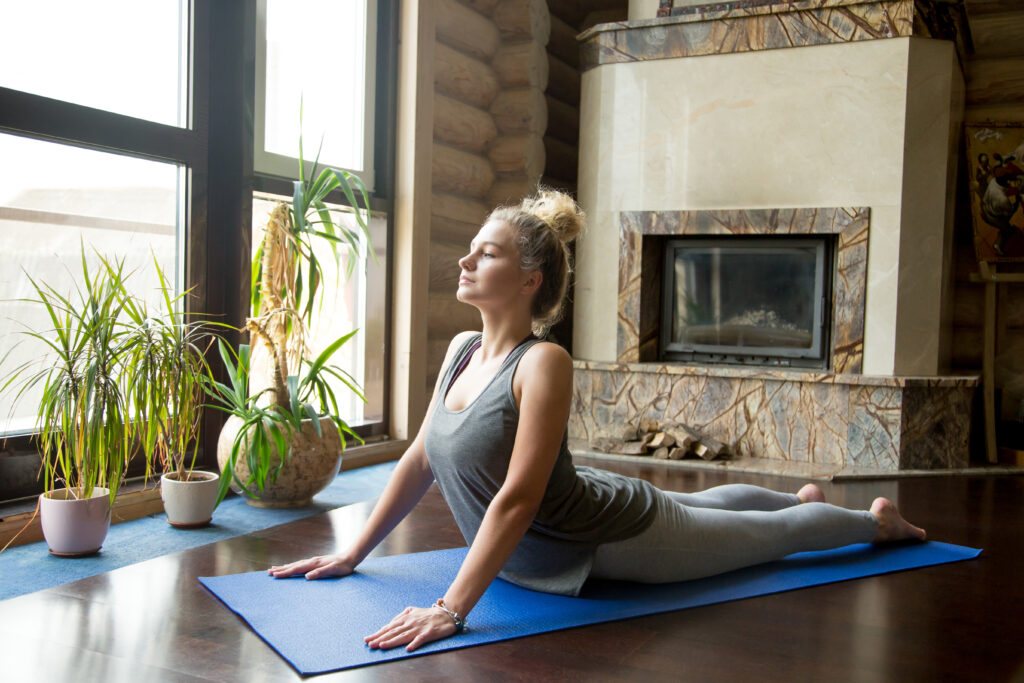
A Beginner Practicing Yoga at a Dedicated Corner of her House
Quick tip: Make your dedicated space more inviting by keeping your yoga mat in a visible place and add some plants with soft lighting. So, simply seeing it can remind you to invest a few minutes to your well-being.
2. Try to Start with Basic Yoga Asanas (Poses)
As a beginner, it is advised to start with simple yoga asanas (poses) rather than attempting advanced poses. In the beginning basic yoga poses help you understand body movements, improve coordination, and let you become familiar with yoga practice.
you can explore some beginner-friendly yoga poses given below:
* Mountain Pose (Tadasana): Helps develop body awareness and posture.
* Child’s Pose (Balasana): Offers a gentle resting position.
* Cat-Cow Pose: Encourages gentle spinal movement.
* Butterfly Pose: Provides a gentle stretch to the inner thighs.
* Tree Pose (Vrikshasana): Helps practice balance and concentration.
Always remember, yoga is not about to attain perfection, but to understand your body and move within your comfort level.
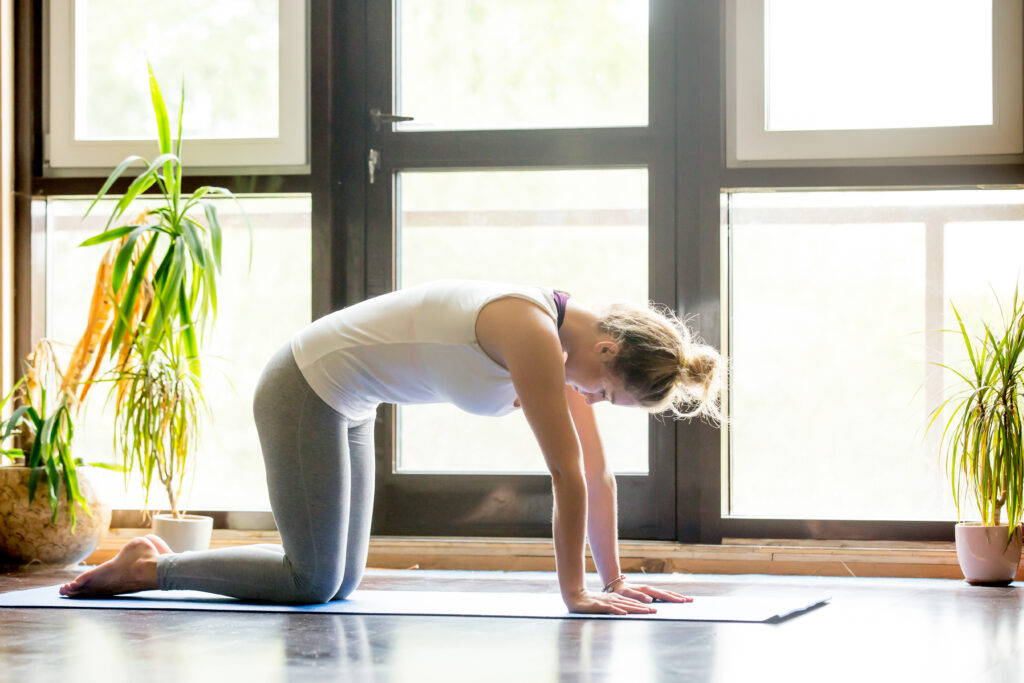
A Beginner Practicing Cat-Cow Pose at Home
Quick tip: As a beginner you should start with two or three poses and gradually introduce more as you become flexible and comfortable.
3. Start with Basic Yoga Essentials
You do not require fancy and expensive equipments to start yoga at home. You need few basic things which can make your practice more comfortable and convenient.
You should keep following items ready:
* Yoga mat: gives a comfortable, firm and non-slip surface.
* Comfortable clothing: Allows free movement and stretching.
* Yoga blocks: Help support your body during certain poses.
* Yoga strap: Can assist with gentle stretches.
* Water bottle: helps keeping you hydrated while doing asanas.
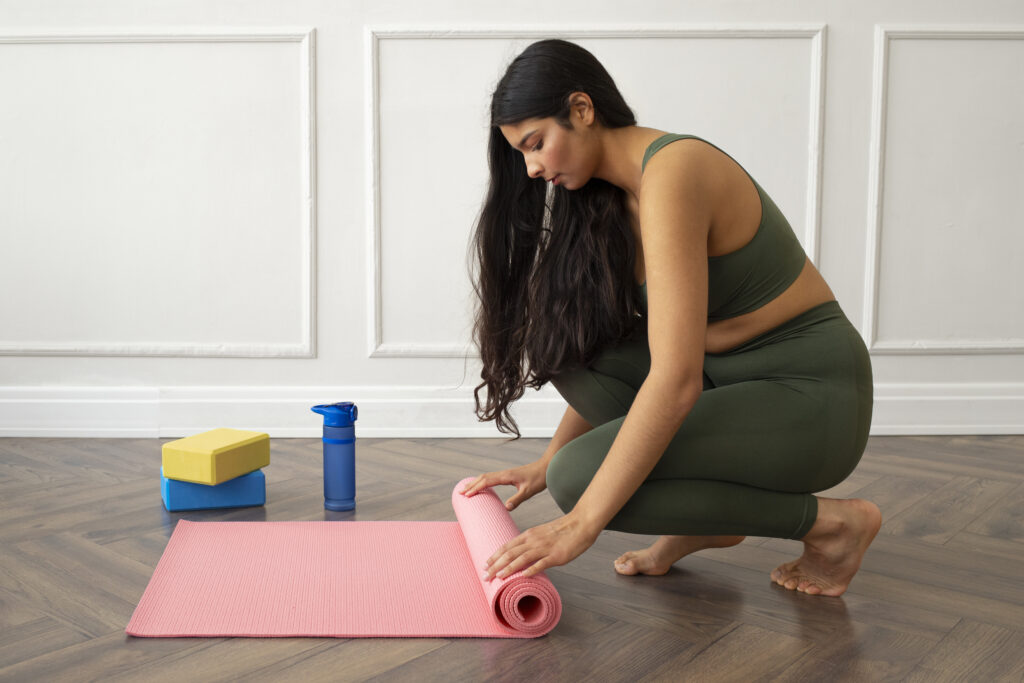
A Beginner with Basic Yoga Essentials
Quick tip: For a beginner, generally a good-quality yoga mat and comfortable clothes are sufficient. You can buy the above mentioned accessories later if you find them useful.
4. Select a Time to Practice which is Most Suitable to Your Daily Routine
another advantage of home yoga is the flexibility to practice whenever it suits your daily schedule. Some people prefer morning yoga because it provides a calm and fresh environment. While others may enjoy evening yoga as it is a good way to relax after a busy day. So, there is no compulsion of fixed timing for practicing yoga. The most suitable time is the one that lets you to practice consistently without being exhausted and feeling rushed.
But, if you are planning to practice yoga after meals, then there should be at least 2 hours gap for digestion to start the yoga poses, particularly before attempting bending or twisting poses.
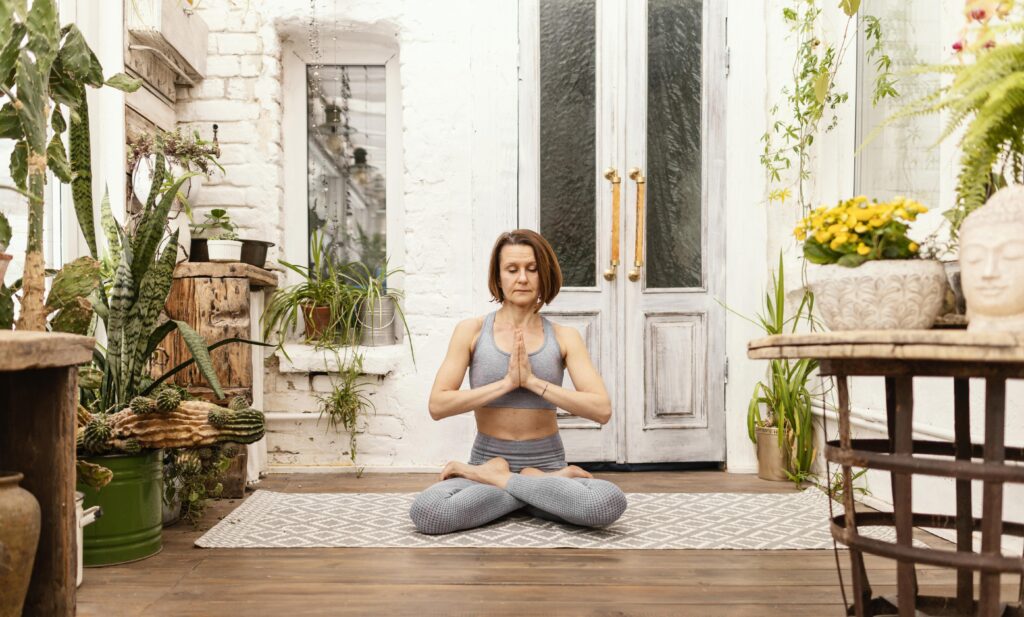
A Beginner Practicing Yoga in the Morning
Quick tip: Try to stick to the chosen time and consider it as a small appointment with yourself. This habit helps you develop consistency over time.
5. Beginners should start with Short and Simple Sessions
Beginners when starting yoga at home, should avoid setting unrealistic goals for themselves. You do not have to practice for an hour from the beginning. Begin with just 10–15 minutes and gradually increase the duration depending upon your ease and flexibility. A short and simple session is easier to follow even in a busy schedule and can help you build a consistent and sustainable habit.
There is a short 15-minute yoga routine suggested for beginners which is simple to follow:
| Time | Poses |
| 2 minutes | Gentle breathing |
| 2 minutes | Mountain Pose |
| 3 minutes | Cat-Cow Pose |
| 2 minutes | Butterfly Pose |
| 3 minutes | Child’s Pose and gentle stretching |
| 3 minutes | Relaxation |
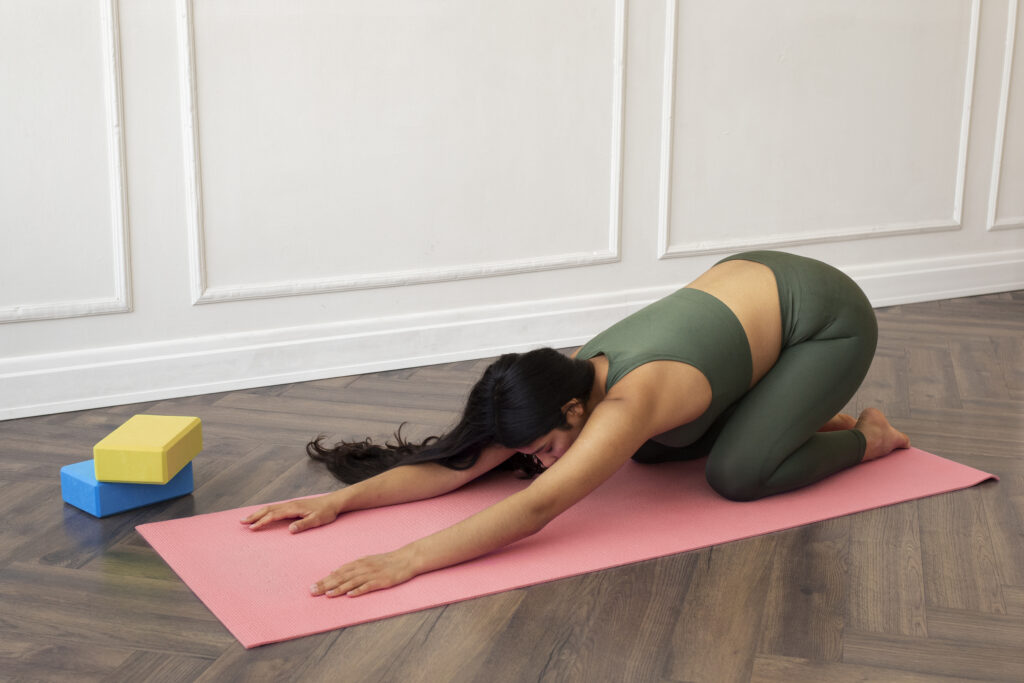
A Beginner Practicing Child’s Pose and Gentle Stretching
Quick tip: Beginners can adjust this routine according to their comfort and physical flexibility. The purpose is to enjoy and relax rather than exhaust yourself.
6. Observe and Coordinate Your Breathing with your Movement
To observe and coordinate your breathing is an essential part of yoga. It helps you remain aware of your movements and brings a sense of mindfulness to your practice.
Beginner, should start observing their natural breathing pattern and try the following simple steps:
* Sit comfortably with your back relaxed.
* Close your eyes if comfortable.
* Inhale gently through your nose.
* Exhale slowly without forcing your breath.
* Continue for a few comfortable cycles.
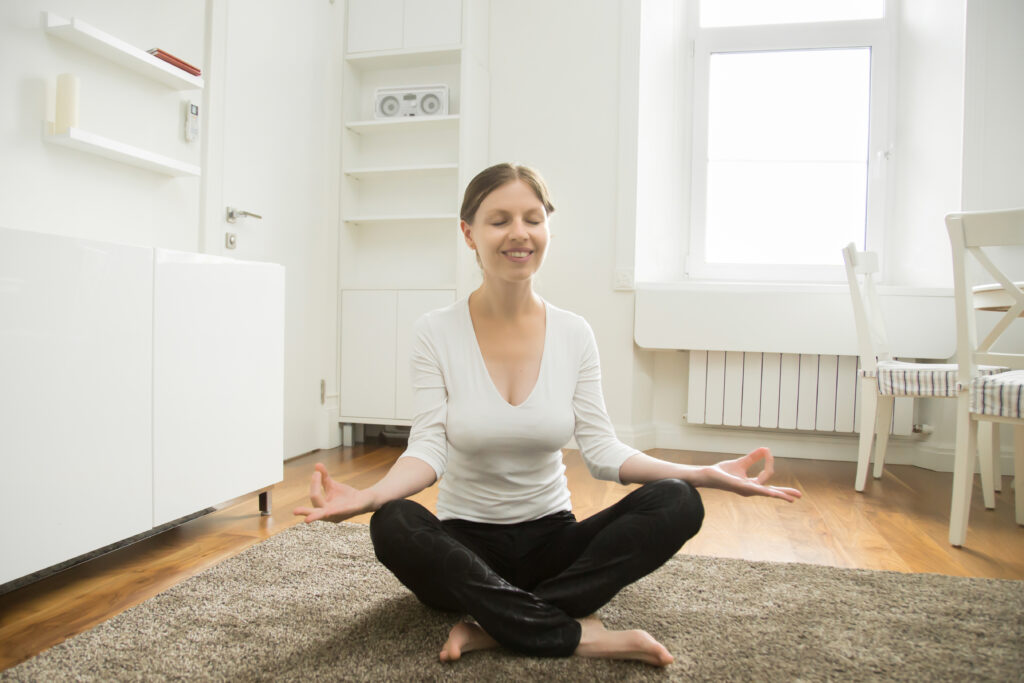
A Beginner Observing her Breathing
Quick tip: You should avoid holding your breath or practicing forceful breathing techniques without proper guidance. Always remember, yoga is not just about physical postures but it also teaches to breathe mindfully.
7. Choose Suitable Beginner-Friendly Online Yoga Classes
These days several beginner-friendly yoga videos and online classes are easily available on the internet. You can choose a suitable online class according to your requirements and can make your learning process easier.
In these beginner-friendly yoga videos and online classes, the instructors generally demonstrate basic poses, breathing techniques, and simple sequences. However, make sure you choose classes specifically designed for beginners. So, that you avoid chances of getting physically hurt such as getting sprained or aches of any kind.
You should look for instructors who explain:
* How to position your body correctly.
* How to enter and leave a yoga pose safely.
* How to modify poses according to your ability.
* When to take rest or stop.
* How to coordinate breathing with movement.
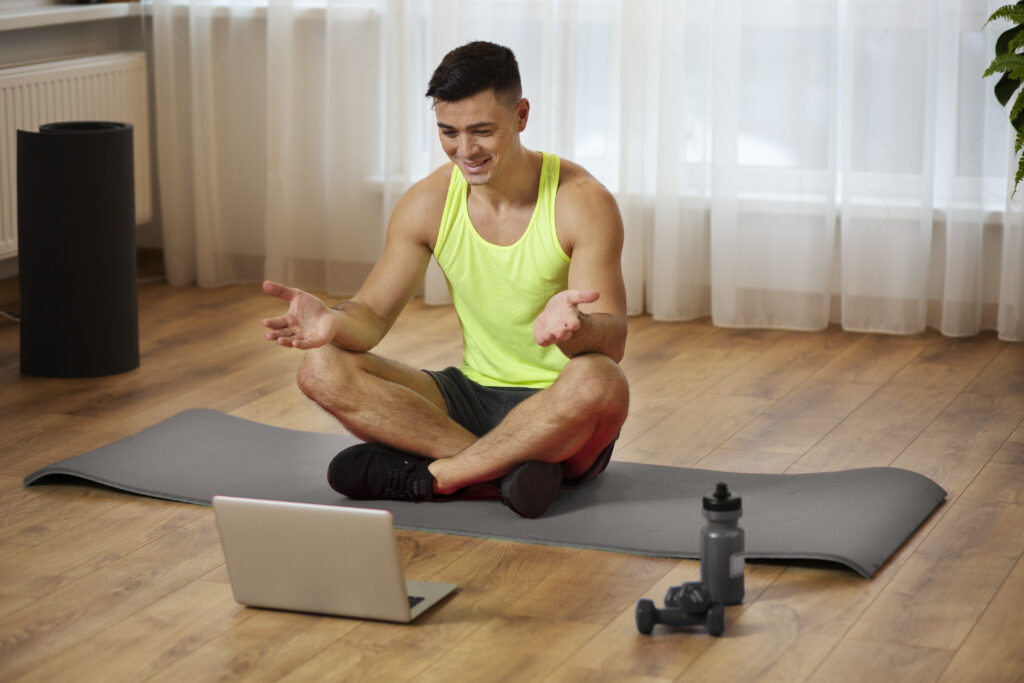
A Beginner Talking to his Instructor about his Specific Requirements
Quick tip: Beginners should not blindly imitate every movement shown in a video as your body may have different flexibility and mobility levels from the instructor’s.
8. Wear Comfortable Clothes and Avoid Unnecessary Distractions
Beginners should choose clothes that allow them to stretch, bend, and move freely. There is no need to buy branded yoga outfits or expensive fitness clothing. Rather you should go for simple, breathable, and stretchable outfits.
Another important thing apart from comfortable clothing is to create an environment that allows you to concentrate and frees from unnecessary interruptions. A distraction-free environment allows you to focus better on your movements, breathing, and overall experience.
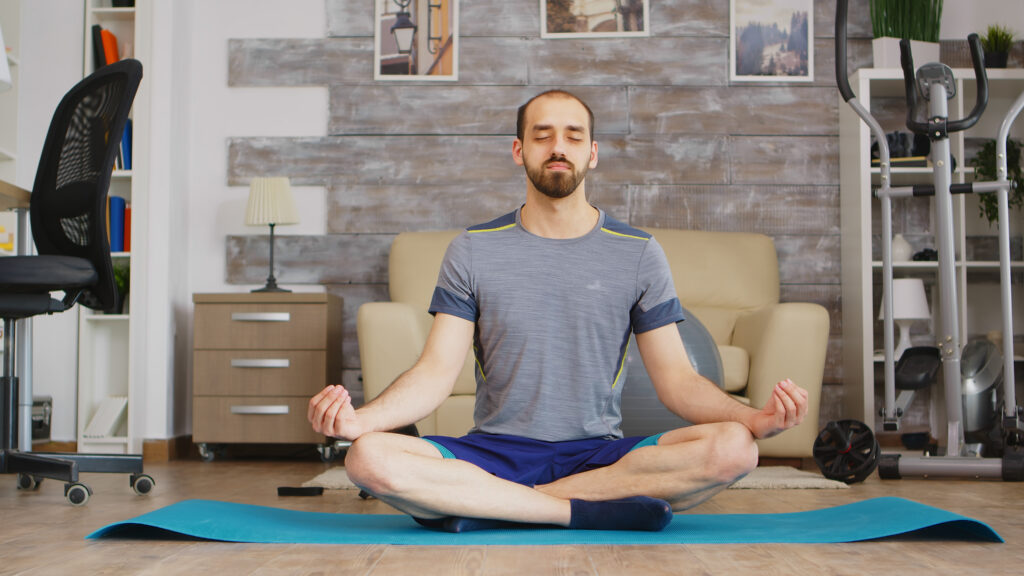
A Beginner Wearing Comfortable Clothes and Sitting in Distraction Free Environment
Quick tip: Always wear comfortable clothes and keep your phone on silent mode to avoid any discomfort and unnecessary interruptions.
Bonus tip: You can also play soft instrumental music if it helps you relax.
9. Understand the Fitness Level of Your Body and Never Force a Pose
The flexibility, strength, and physical ability may vary from individual to individual. Therefore, it is important for beginners to understand and judge their fitness level before practicing yoga. So, in the beginning you may find certain poses difficult to practice as your fitness level is not at par with your instructor. This does not indicate that you are not practicing yoga in a right way.
As a beginner you should keep these simple precautions in mind:
* Never force your body into a particular position.
* Avoid comparing your performance with others.
* Use yoga blocks and cushions for support.
* Take breaks whenever necessary.
* Stop if you experience sharp pain, dizziness, or unusual discomfort.
Always remember that you have stated yoga to support your well-being, not to punish your body by stretching it beyond its limits.
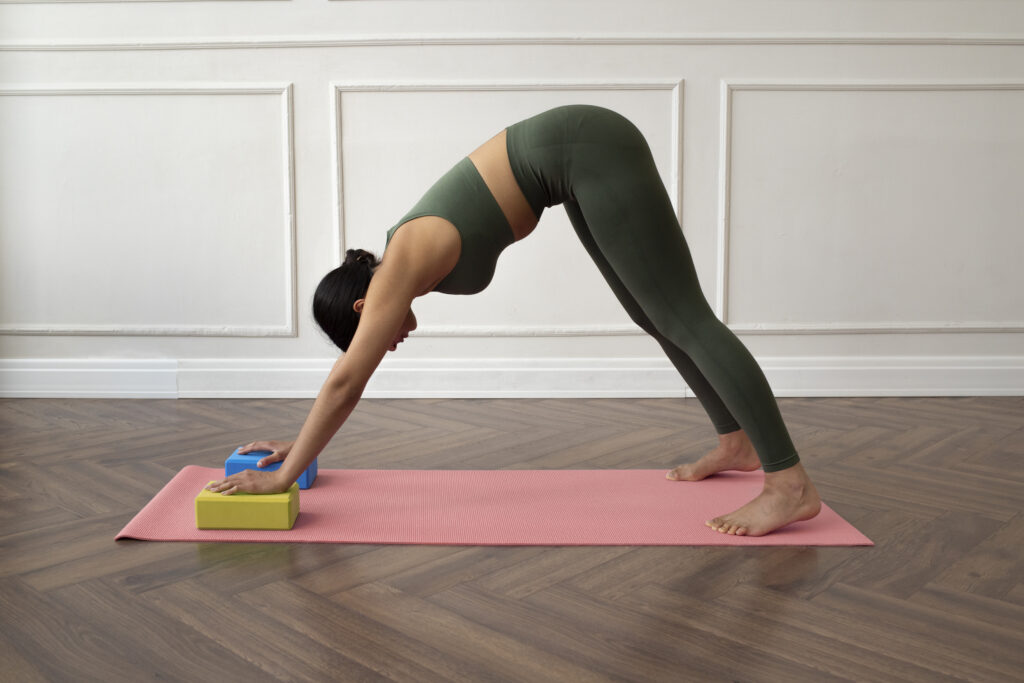
A Beginner Practicing a Yoga Pose with Help of Yoga Blocks
Quick tip: If you have an existing medical condition, injury, or have recently undergone surgery, do consult your healthcare professional before starting yoga. You should also get guidance from a qualified instructor about suitable modifications according to your condition.
10. Try to Stay Consistent and Always End Your Sessions with a Relaxation Practice
Any new activity feels exciting in the beginning, but to reap benefits one should try to be consistent with that activity. As a beginner, you may feel enthusiastic about yoga sessions initially. But you may find it difficult to maintain the same motivation level every day.
You can follow these simple ways to make yoga sessions a regular part of your daily routine:
* Set a realistic daily goal.
* Begin with short sessions.
* Follow a simple weekly routine.
* Track your practice on a calendar.
* Celebrate small improvements.
* Choose yoga sequences that you genuinely enjoy.
So, by following these simple steps, you can build a consistent and healthy habit for a life time.
Another important part of practicing yoga is ending your sessions with a relaxation pose. Few minutes of quiet time gives you an opportunity to slow down, observe your breathing, and makes you feel good about the time you have dedicated to yourself.
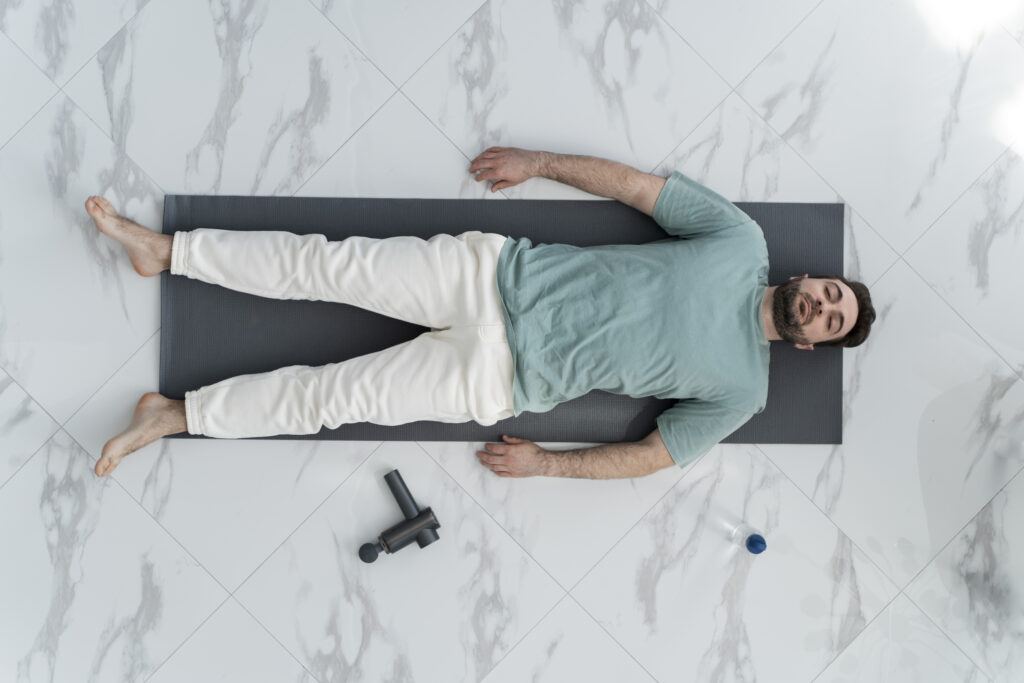
A Beginner Practicing Shavasana (Corpse Pose) after a Yoga Session
Quick tip: You should spend a few minutes in Shavasana (Corpse Pose) and allow your body to relax naturally.
Mindful Conclusion
Getting Started with yoga practice at home is a simple yet meaningful way to incorporate wellness into your everyday routine. You should not need to wait for the perfect time, a special occasion or a higher level of fitness to begin your yoga practice. By following these 10 easy tips to start yoga at home, beginners can gradually develop a consistent and healthy habit that suits their lifestyle.
The key focus should be to start small, learn the basics, respect your body’s limitations and remain consistent with your efforts. As beginner, whether you practice for 10 minutes in the morning or spend a little time stretching in the evening, your every small effort counts. So, roll out your yoga mat, take a deep breath and give yourself the opportunity to experience the simple and joyful world of yoga. As a beginner, your journey towards a healthier and more mindful lifestyle can begin right in the comfort of your home!
Frequently Asked Questions (FAQs)
1. How can a beginner start yoga at home without an instructor?
A beginner can start yoga at home without an instructor by joining beginner friendly online guided yoga sessions. You only need a comfortable space, a yoga mat and start learning basic yoga poses specifically designed for beginners.
2. Which yoga is best for beginners at home?
For beginners, the gentle Hatha yoga, basic stretching and beginner-friendly online yoga sessions are advisable. Some simple poses such as Mountain Pose, Child’s Pose, Cat-Cow Pose and Butterfly Pose can help beginners to get started with yoga.
3. what should be the duration of yoga session for the beginners at home? Initially, beginners can start with 10–15 minutes of yoga session. Once they become comfortable with the poses, they can gradually extend their practice to 20–30 minutes or longer, depending on their physical ability and needs.
4. Is it necessary to have a flexible body before starting yoga?
No, it is not necessary to have a flexible body to start yoga practice. Beginners can start with simple poses and through comfortable and consistent practice gradually they can improve their flexibility.
5.How long does it take to reap the benefits of yoga?
The benefits of yoga may vary from individual to individual. Some individuals can feel relaxed and stress free relatively early, while the real changes in fitness level such as improvement in flexibility, strength and balance definitely requires consistent and long-term practice.
Call to Action
If this blog inspires you to practice yoga at home, please do share your thoughts and opinions about the tips shared in the post. Please do not forget to mention your most favorite beginner-friendly yoga pose in the comments below.
For more such simple, inspiring, practical, and mindful wellness ideas, keep reading and exploring our blogs and take small steps towards a healthier you!